
Water heaters
Tankless Heaters
in Little Rock
Hot water turning cold, or an error code? We repair and replace gas and electric tankless water heaters, including Stiebel Eltron electric units. We find the cause before recommending the fix.
- Master Plumber MP #6781
- Licensed & insured
- 20+ years in the trade
Signs you need tankless water heater repair or replacement
When a tankless unit runs cold or shows an error code, we find out why before anyone talks about a new unit.
- Water that swings between hot and cold.
- An error code on the unit's display.
- No hot water, even with the unit powered on.
How we find the cause
Repair or replace a tankless unit? Here's how we decide.
It comes down to the unit's age, what failed, and whether it fits the house. We check all three, then tell you which way to go and why.
The finding: an aging unit that needs a part you can no longer get.
Replace it.
A unit in good condition, with parts available, is usually a repair.
What we check first
No hot water is a symptom, not a diagnosis. These are the places we look on a tankless unit.
The error code. Most units show a code on the display when something is wrong. It tells us where to start, not what to replace.
The heat source. Gas units heat with burners, so they need a working ignition, a steady gas supply, and clear venting and air supply. Electric units heat with elements.
The sensors. Flow sensors tell the unit water is moving. A faulty sensor is a common cause of ignition failure.
Buildup. Minerals in the water collect in the heat exchanger. That cuts efficiency and can damage parts.
The fit. A unit too small for the house, or one installed wrong (venting, gas line sizing, electrical), keeps having problems until that is fixed.
We tell you what we found, and what it will take, before any work starts.
Word gets around
Professional service, in customers' words
4.9★ on Google · 20+ years in the trade behind the work · Rinnai PRO
What a tankless water heater repair or replacement includes
- 01
Call and get on the schedule.
- 02
A licensed tech finds what failed.
- 03
You get the real number before the work starts.
What's included
- Finding what actually failed
- Repair of the failed part when the unit is worth fixing
- A new gas or electric tankless unit, sized for your home, with the permit and haul-away of the old unit
- Venting, gas line, and electrical work, done to code
- Flushing and descaling every 12 to 18 months
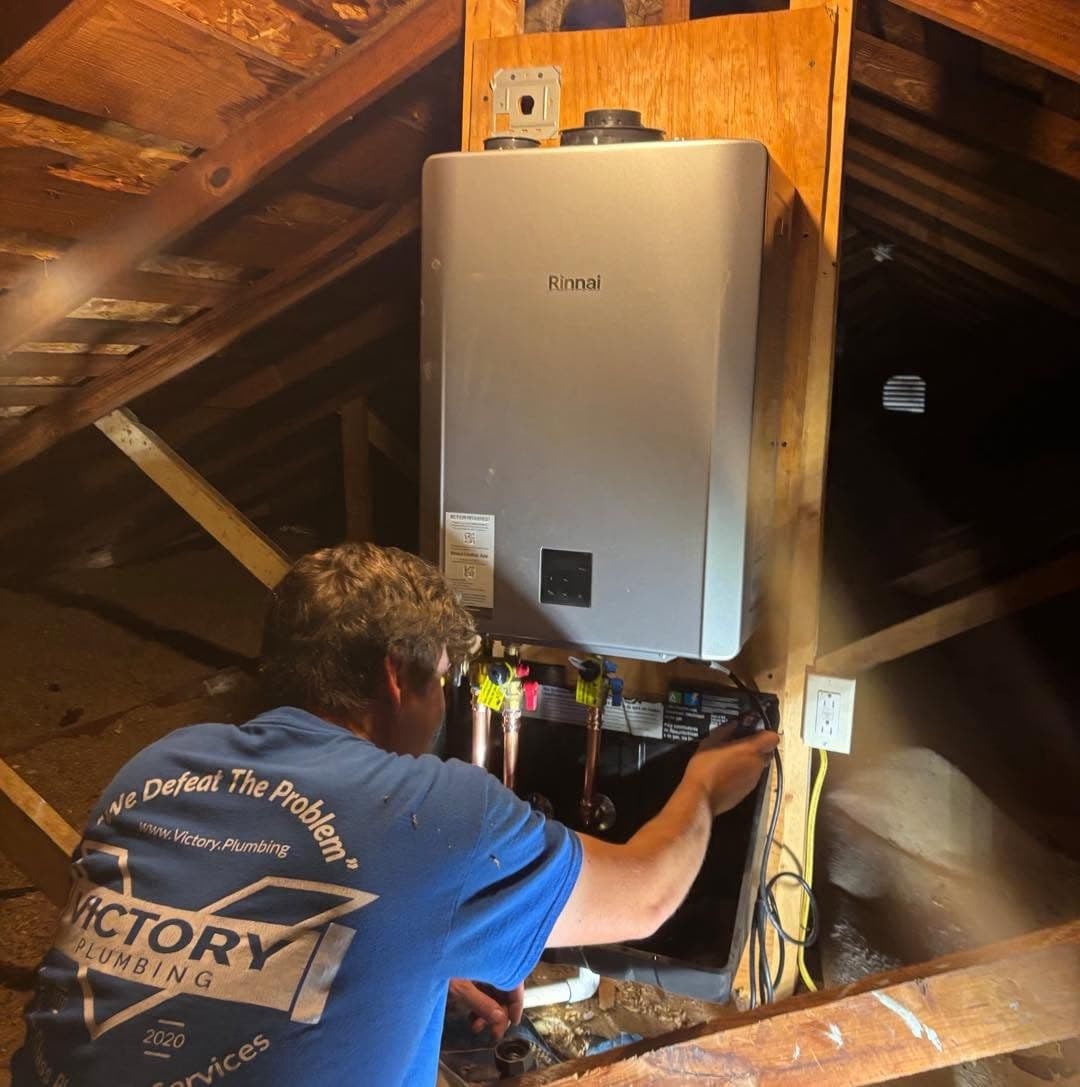
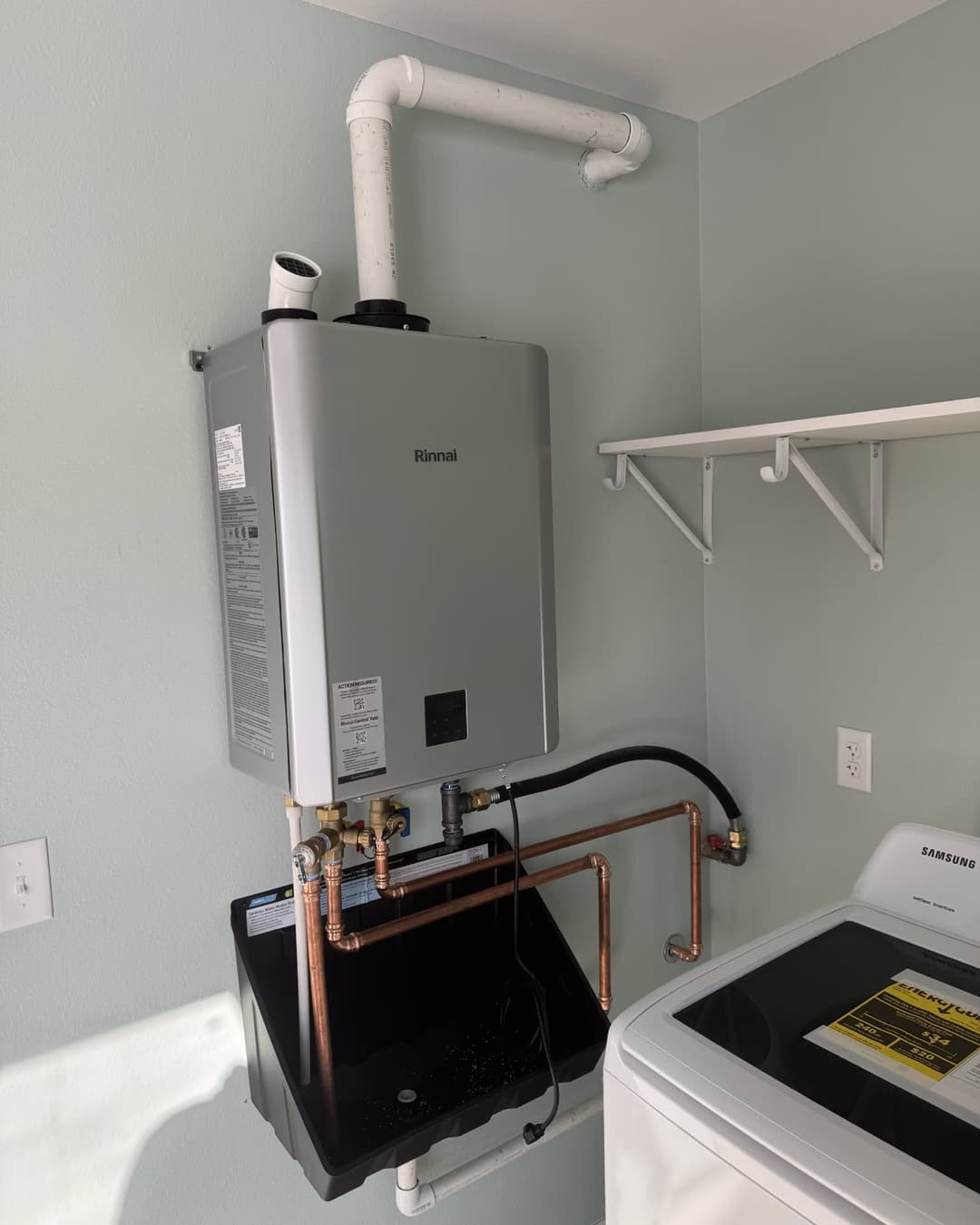
- Rinnai PRO installs on gas units, Stiebel Eltron installs on electric, plus repairs on Navien, Noritz, and Rheem units
We make the problem the problem, not the price.
How we price
What does a tankless water heater cost?
It depends on what the look finds. A price over the phone is a ballpark.
The number turns on repair or replacement, the unit's size, gas or electric, and any gas line, venting, or electrical work.
Simple service is billed by the hour. Big jobs are priced per job, with a free estimate.
What is a tankless water heater?
A tankless water heater, also called an on-demand or tankless hot water heater, heats water as it flows through the unit instead of storing it in a tank.
Compared with a tank, it lasts longer and doesn't run out of hot water when it's sized right. Sticking with a tank? See tank water heaters.
How it works, tank vs tankless, and why it matters
Instead of keeping gallons of water hot, it heats water only when a hot tap is on. Inside are a heat exchanger (heated by gas burners or electric elements), flow sensors that detect water moving, and electronic controls that set the temperature. Even gas units need electricity for the ignition and controls.
How it compares with a tank:
- Hot water. Tankless doesn't run out, as long as you stay within the unit's flow rate. A tank runs out when it's empty.
- Energy. No standby heat loss from keeping a tank hot all day. Per ENERGY STAR, that can make it more energy efficient than a standard tank.
- Lifespan. Tankless: up to 20 years with proper care. Tank: 8 to 12 years.
- Space. The wall-mounted design frees up floor space.
- Wait at the tap. Tankless or tank, hot water takes time to reach a far faucet. A recirculation system shortens that wait by keeping hot water moving through the pipes.
Switching from a tank can mean changes to the gas line, venting, or electrical service. For the full guide, read Tankless water heaters 101.
What causes tankless water heater problems?
Most come down to mineral buildup, blocked venting, ignition failure, an overloaded unit, or a bad install.
The common causes, one by one
Knowing which one you have is the difference between a repair and a new unit.
- Mineral buildup. It cuts efficiency and can damage parts inside the unit.
- Blocked venting or air supply. A gas unit can't burn without it.
- Ignition failure. Often a faulty sensor or a gas supply problem.
- The cold water sandwich. A short burst of cold water between two runs of hot.
- An overloaded unit. Too many fixtures running at once for the unit's capacity.
- A bad install. Wrong venting, gas line sizing, or electrical setup.
Other signs worth a call: low hot water pressure; clicking, rumbling, or humming from the unit; discolored or bad-smelling water; or an aging unit that keeps needing repairs.
How do I keep a tankless water heater running well?
Five habits keep a tankless unit running, starting with a flush every 12 to 18 months.
Five maintenance habits
- Flush and descale it every 12 to 18 months. It clears the mineral buildup that cuts efficiency and wears on parts inside the unit.
- Hard water? A water softener helps. White spots on faucets and cloudy dishes are the usual signs, and homes on private wells are more likely to have it. A softener helps protect the unit from mineral buildup.
- Clean the air intake filter every few months, and keep vents and air intakes clear of debris.
- Stagger hot water use when you can. Too many fixtures at once can push past what the unit can heat.
- Have it serviced every 12 to 18 months. A regular check keeps it running at its best.
None of these fix a unit that was sized or installed wrong. That takes a plumber.
Tankless water heater questions
Can I replace my tank water heater with a tankless one?
Yes. It may take changes to the gas line, venting, or electrical service, so we look at your setup first and tell you what it will take.
How long does installation take?
Most installs take 4 to 6 hours. Switching from a tank can take 6 to 10, when the gas line, venting, or electrical service needs work.
How long do tankless water heaters last?
Most last 15 to 20 years, especially with flushing and descaling every 12 to 18 months.
Can a tankless water heater run out of hot water?
Not the way a tank does. If too many taps run at once and you go past the unit's flow rate, the temperature can drop.
Are tankless water heaters more efficient?
They can be. A tankless unit heats water only when you need it, with no tank to keep hot all day. ENERGY STAR says that can give it better energy efficiency than a standard tank.
How often should a tankless water heater be serviced?
Every 12 to 18 months: a flush and descale, plus a general check. Minerals build up even in soft water, and faster in hard well water.
Do you install both gas and electric tankless water heaters?
Yes. We install and service both; for electric tankless, the brand we install is Stiebel Eltron. We make sure you get the right model and size for your home. For a whole-house tankless water heater, size comes down to flow rate, in gallons per minute (GPM), and on gas units, burner output in BTUs.
Tankless water heater service across Central Arkansas
We work out of North Little Rock and install and repair tankless water heaters in homes across Little Rock and Central Arkansas. Monday to Friday, 7:30 a.m. to 6 p.m.
Get the right answer
Small things turn into bigger problems.
An error code that keeps coming back is easier to deal with now than after the unit stops heating. Call, and we'll find the cause first.