
Pipe replacement
Repiping
in Little Rock
Rusty water, pressure that sags, or a new leak every few months? We replace worn-out water, drain, and gas piping and reroute failing lines, and we find the cause first.
- Master Plumber MP #6781
- Licensed & insured
- 20+ years in the trade
Signs you need repiping
Old pipe tends to fail all over the house, not in one spot. Rusty or brown water, a metallic taste, and leaks that keep turning up somewhere new are the usual signs. We check whether it's the pipe or something simpler before recommending a repipe.
- A new leak every few months, each in a different spot.
- Pressure that drops when a second faucet opens.
- Old cast iron drains that leak or keep running slow.
How we find the cause
Repipe or repair: which does your house need?
One leak on otherwise sound pipe is a repair. Pipe that's corroded throughout, or leaking in one place after another, usually means a repipe. Which one depends on the pipe's age and material, and we look before recommending either.
The finding: one pinhole leak in copper that's otherwise in good shape.
Repair the leak, not the whole house.
Galvanized pipe rusting through from the inside is when the house needs new pipe.
What we check first: the pipe, the leaks, the water, and the drains
A repipe is a big job, so we make sure it's the right one before a single wall is opened.
The pipe. What it's made of, and how old it is. Galvanized steel, gray polybutylene, and very old copper are the usual candidates.
The leaks. Where they've been, and how often. Pinholes in more than one spot on copper can mean the pipe is wearing thin.
The water. Rust at the first draw, or weak pressure at every fixture, points to the pipe rather than one faucet. A water bill that creeps up can mean leaks you haven't found yet.
The drains. Old cast iron and galvanized drain pipe can rust through, crack, or narrow with buildup inside.
Outside the house. The buried line from the meter is water line repair, and the line that carries waste out to the street is sewer line repair.
Then you hear which job it is, a repair or a repipe, and what it costs.
Word gets around
A job done well, in customers' words
4.9★ on Google · 20+ years in the trade behind the work
What repiping includes
- 01
Call and get on the schedule.
- 02
A licensed tech checks the pipe, and what's failing.
- 03
You get the real number before the work starts.
What's included
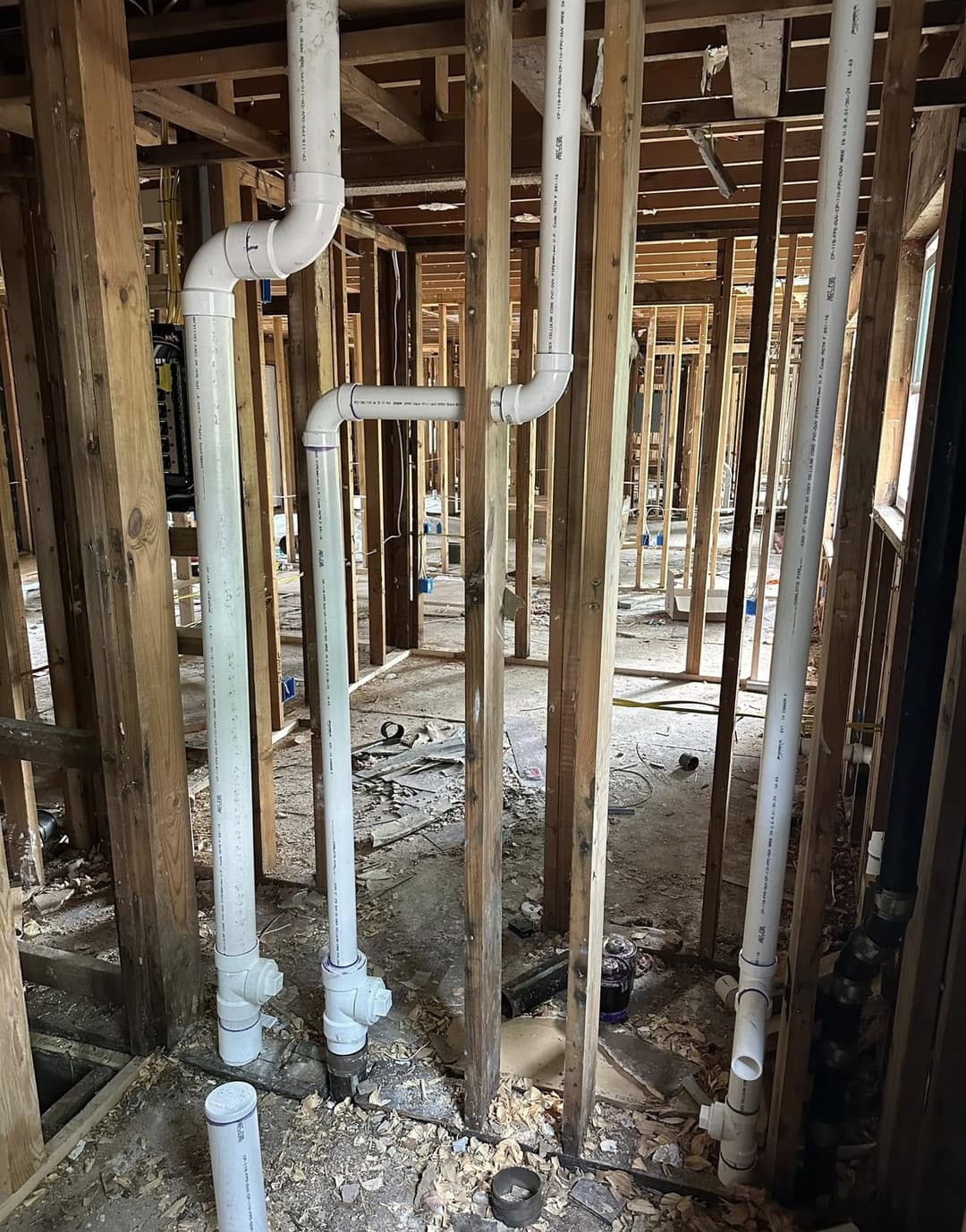
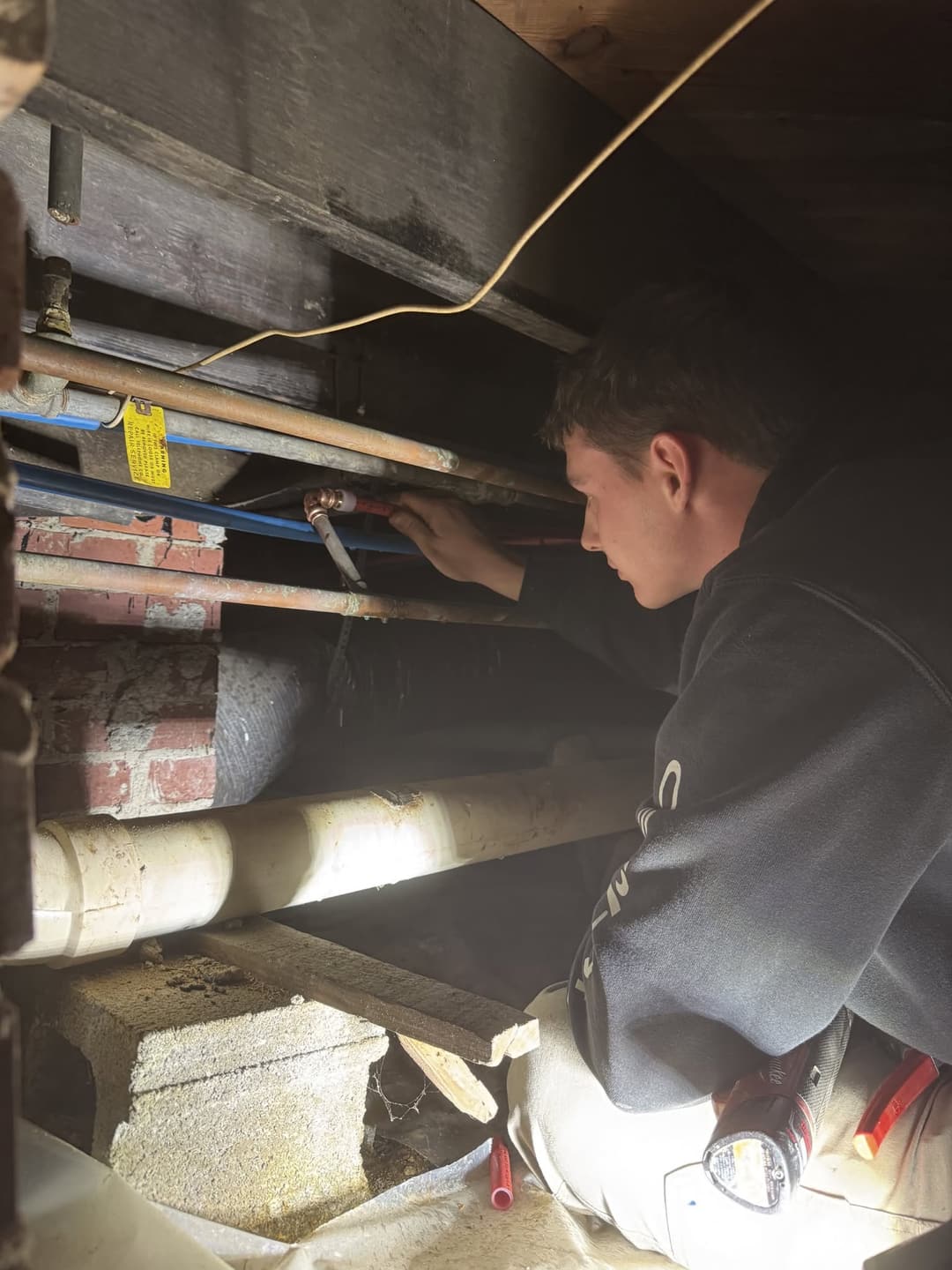
- Whole-house water repiping, in PEX or copper, your choice
- Reroutes that take a failing line, like one leaking under the slab, out of service
- Drain repiping, with old drain and waste pipe replaced
- Whole-house gas repiping, with the permit pulled and the new piping pressure-tested before the gas goes back on
- A 5-year warranty on all labor and material, for whole-house repipes (drains included) and whole-house gas repipes; partial repipes and reroutes aren't covered
- A diagnosis first, to rule out the simpler fix
We make the problem the problem, not the price.
How we price
What does repiping cost?
It depends on the size of the house and how much of the piping needs replacing. A price over the phone is a ballpark.
What moves the number: water, drain, or gas, PEX or copper, how many bathrooms and floors, and how hard the pipe is to reach.
Simple service is billed by the hour. Big jobs are priced per job, with a free estimate. A water, drain, or gas repipe, or a reroute, is a big job, so the estimate is free.
PEX or copper: which pipe for your repipe?
Both are proven, long-lasting choices for water lines, and the choice is yours. PEX is flexible plastic tubing that won't rust. Copper is rigid metal pipe with decades of use behind it.
How the two compare, and the old pipe a repipe replaces
- PEX. It bends around corners, so it needs fewer fittings, and it goes in faster. It doesn't corrode, it usually costs less, and it's generally rated for about 30 to 50 years. Sunlight breaks it down, so it isn't left exposed outdoors.
- Copper. It's soldered at the joints, handles heat and pressure well, and often lasts 50 to 70 years. It costs more, takes longer to install, and acidic water can wear it from the inside.
- What comes out. Galvanized steel, which rusts from the inside and narrows the flow; gray polybutylene, a 1980s-era plastic known for failing; CPVC that has turned brittle with age; and, in some older homes, lead.
New pipe of either kind means cleaner water, steadier pressure, and no more patching the same old lines. To keep it that way, skip chemical drain cleaners, notice when the pressure changes, and keep tree roots away from anything buried.
Whole-house gas repiping
When the gas piping through the house is old, corroded, or leaking in more than one place, we replace it. We pull a permit for every gas repipe and pressure-test the new piping before the gas goes back on.
The pipe we use, the test, and where gas line work begins
Inside the house we use black iron pipe or CSST, a flexible stainless steel tubing in a protective jacket. Yellow polyethylene goes only underground.
- Signs it's time. Rust on black iron, fittings that leak again after they've been fixed, or piping too small to feed a new appliance along with the old ones.
- The test. The new piping is held under pressure for a set time. If the pressure drops, there's a leak to find before any appliance is lit.
- Only the house's piping. The gas company's pipe up to the meter is theirs. A new line for one appliance, or a repair to a buried gas line, is gas line work.
- A gas smell. Leave the house before you call anyone. The full steps are on our gas line page.
Reroutes: a new path around a failing line
A reroute leaves a failing water line, often one leaking under the slab, in place but out of service, and runs new pipe through the walls or attic. We reroute in PEX or copper.
When a reroute beats opening the floor, and where to start
Opening the slab to fix one leak can make sense once. A line under the slab that has leaked before, or that runs under finished floors, is usually better rerouted: the floor stays closed, and the old pipe can't leak under the foundation again.
- Where it runs. Through interior walls or the attic, whichever gives the shorter, safer path. A line in the attic needs insulation against summer heat and winter freezes.
- Find the leak first. Locating a leak under a slab is leak detection work. Once it's found, a reroute is often the fix.
- One line or all of them. A reroute replaces one line, so it's a smaller job than a repipe. When most of the pipe in the house is failing, one whole-house repipe makes more sense than rerouting line after line.
Repiping questions
When is repiping better than repairing leaks?
When the pipe itself is the problem: corrosion all through the house, leaks in several places, or a material like polybutylene, galvanized steel, or lead. One leak on sound pipe is still a repair, and we tell you which you have.
What is repiping, and do I need it?
Repiping replaces a home's old pipes with new ones: the water supply lines, the drains, or the gas piping, in one area or the whole house. If your pipes are galvanized steel or polybutylene, or leaks keep showing up in new places, it's worth a look.
How long does a whole-house repipe take?
A whole-house water or gas repipe usually takes 1.5 to 3 days. A drain repipe takes 1 to 5, depending on whether the house sits on a crawl space or a slab. We look at your house before we say how long.
Will I be without water during a repipe?
Not for the whole job. New pipe is usually run before the old pipe is cut out, so the water is off in stretches, mostly while the new lines are connected.
Will repiping mean opening my walls?
Usually in places. Pipes run inside walls, floors, and ceilings, so a repipe means openings in the drywall to reach them, most often small ones rather than whole walls. Flexible PEX can often be pulled through with fewer openings than copper. We don't patch the drywall or floors afterward, so plan on a drywall or flooring pro to close them up.
Do you repipe drain lines?
Yes. We replace old drain and waste pipe, like cast iron or galvanized drains that have rusted through or cracked. A clogged drain is a job for drain cleaning, and the main line out to the street is sewer line work.
Are your plumbers licensed and insured?
Yes. All of our techs hold an Arkansas state license, and Victory carries insurance. The company's master plumber license is MP #6781, and every tech goes to training each week.
Repiping across Central Arkansas
From our shop in North Little Rock, we repipe homes in Little Rock, North Little Rock, Maumelle, Sherwood, Bryant, and across Central Arkansas. Monday to Friday, 7:30 a.m. to 6 p.m.
Get the right answer
Small things turn into bigger problems.
Another patch on old pipe buys a few months. New pipe ends the patching. Call, and we'll tell you which your house needs before anyone opens a wall.