
Water lines
Water Line Repair
in Little Rock
A soggy spot in the yard, a water bill that jumped, or pressure that's weak one day and banging the next? We repair and replace water lines and pressure reducing valves, and we find the cause first.
- Master Plumber MP #6781
- Licensed & insured
- 20+ years in the trade
Signs you need water line repair
The exterior water line is buried, so the first clues show up in the yard, on the water bill, or at the faucets. We trace them to the cause before recommending a fix.
- A soggy patch in the yard, even in dry weather.
- Pipes that bang when a faucet shuts off.
- Pressure that's weak, or swings from strong to weak.
How we find the cause
Water line repair or replacement: which does yours need?
One failed spot on an otherwise sound line can be repaired. An old line, outdated pipe, or leaks in several places usually means a new one. We find out which before recommending either.
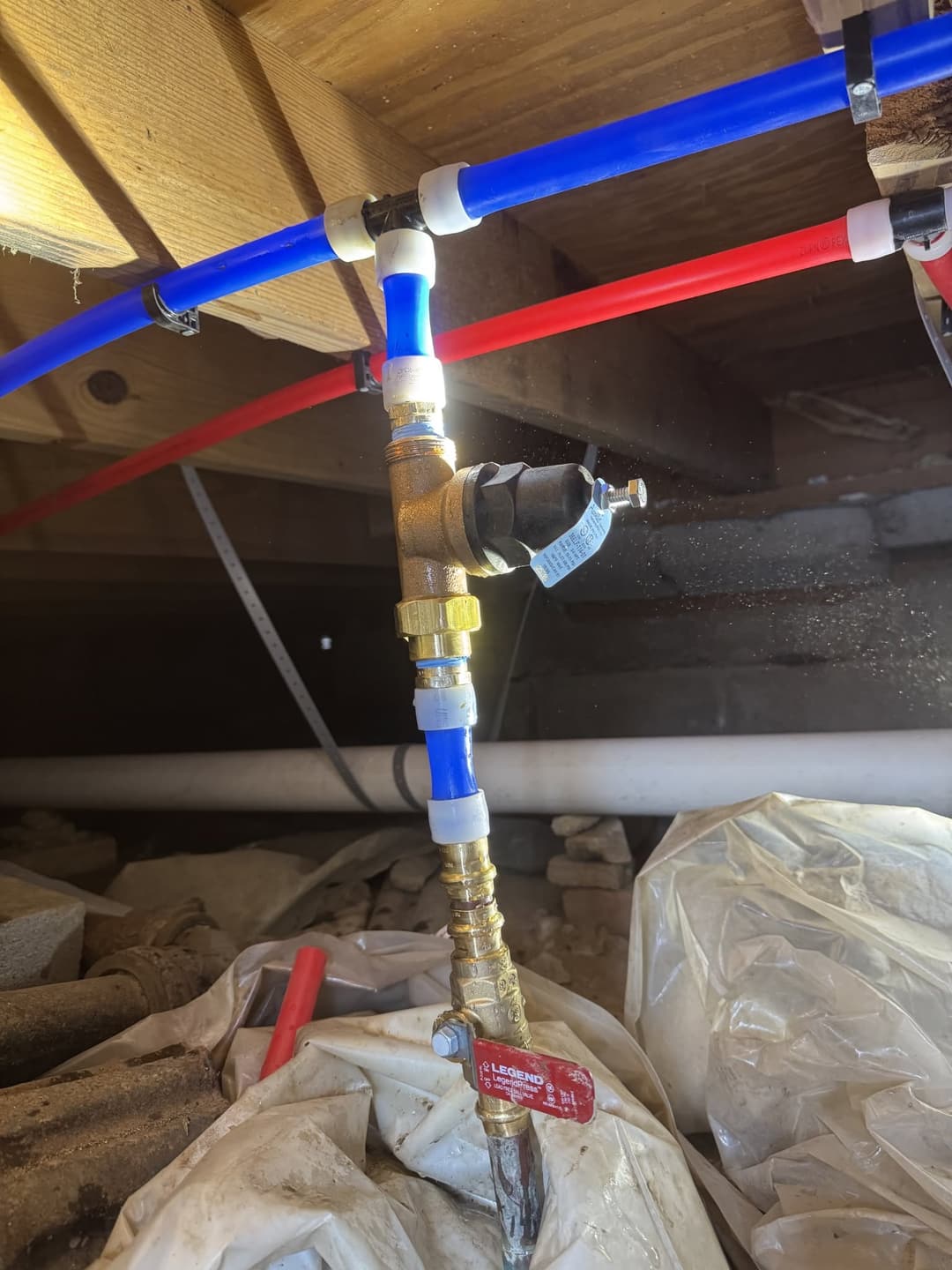
The finding: low pressure all through the house, from a worn-out pressure reducing valve.
Replace the valve, not the line.
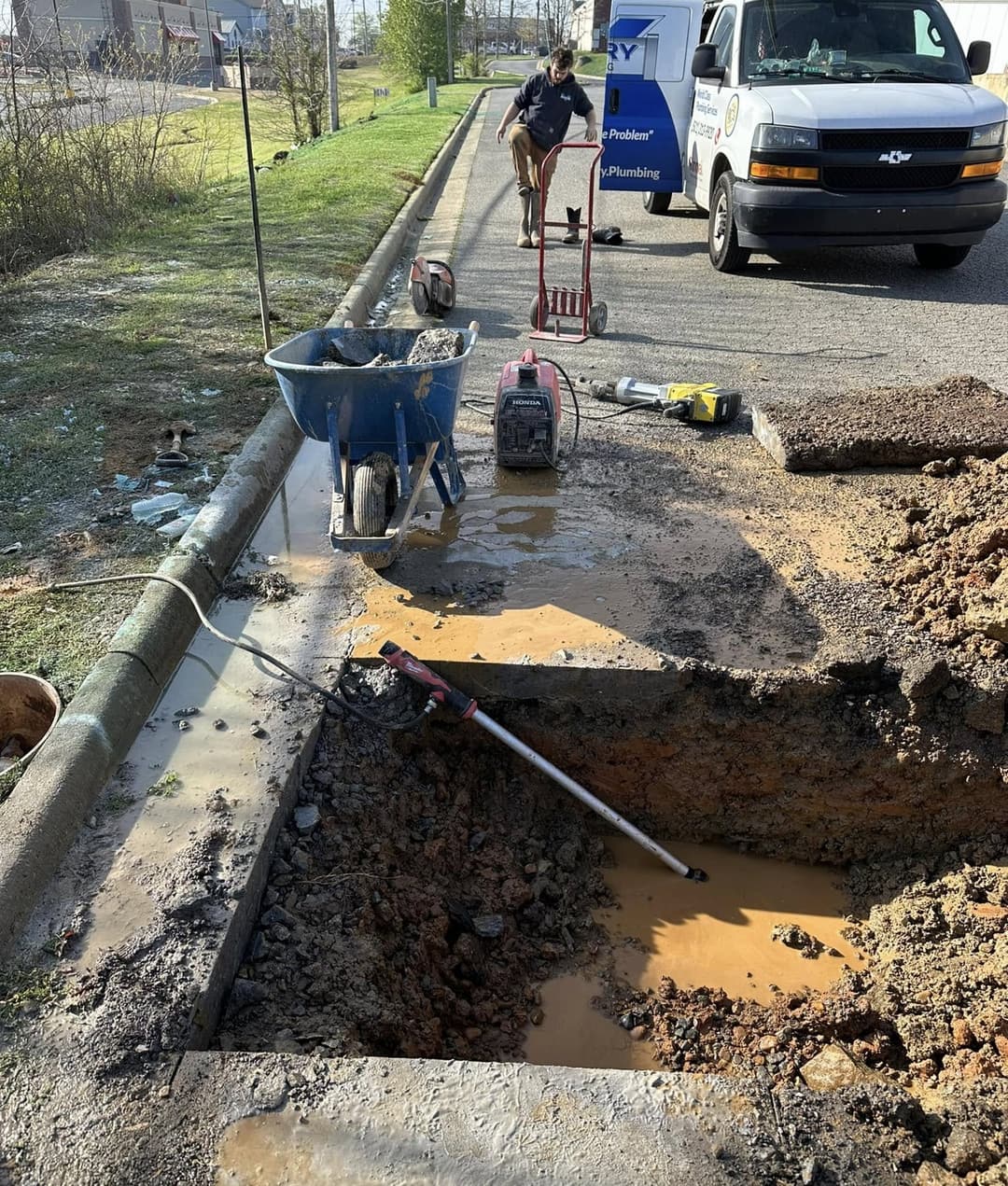
A line leaking underground is when the line itself needs the work.
What we check first: the pressure, the meter, and the yard
A water line problem and a pressure problem can look alike from inside the house, so we start with the facts.
The pressure. A gauge on an outdoor faucet shows what the house is getting. Too high, too low, or swinging each points somewhere different.
The meter. With every faucet and appliance off, a meter that keeps moving means water is leaving somewhere.
The yard. A patch that stays wet, or a strip of grass greener than the rest, can trace a leaking line.
The water itself. Rusty or discolored water, or air sputtering from the taps, can point to a damaged or corroded line.
Where the leak is. Finding a hidden leak, under a slab or deep in the yard, is a job for leak detection.
The drain side. Gurgling drains and sewer smells come from the line that carries water out, not the one that brings it in: see sewer line repair.
Then you get the cause, the fix, and the number.
Word gets around
Water lines and water pressure, in customers' words
4.9★ on Google · 20+ years in the trade behind the work
What water line repair and replacement include
- 01
Call and get on the schedule.
- 02
A licensed tech finds the cause.
- 03
You get the real number before the work starts.
What's included
- Water line leak repair, from a fitting to a damaged section
- Water line replacement, from the meter or a private well to the house, in PEX or copper; the choice is usually yours
- A pressure check with a gauge, to find whether the valve, the line, or a fixture is the cause
- Pressure reducing valve installation and replacement, set for your house
- The main shut-off valve, repaired or replaced when it won't close all the way
- Done to code, on the line and the valve
We make the problem the problem, not the price.
How we price
What does water line repair cost?
It depends on where the line failed and how much of it needs work. A price over the phone is a ballpark.
The number turns on a repair or a new line, how far and how deep it runs, what's over it, and whether the pressure valve is part of the job.
Simple service is billed by the hour. Big jobs are priced per job, with a free estimate. Replacing or rerouting a water line is one of those big jobs.
Pressure reducing valve installation
A pressure reducing valve, or pressure regulator, sits where the main water line enters the house and holds the pressure at a safe level. We install and replace them; most people first notice a failing one as a change in water pressure.
Signs of high pressure, what the valve protects, and how long it lasts
- Banging pipes (water hammer) when a faucet, toilet, or washing machine shuts off.
- Leaks that start in different places, and faucet parts and hoses that wear out early.
- A dripping relief valve on the water heater.
- Bursts of water when a faucet opens.
- Pressure that drops, swings, or creeps up as an old valve wears out.
The valve protects everything after it: pipes and fittings, the water heater, the dishwasher, washing machine, and icemaker, and every faucet and showerhead. Most homes do best between 40 and 60 psi; many valves are set at 50 to 60. On our jobs, 75 psi is the ceiling for a house. Set right, it keeps a steady flow at a safe pressure, and lower pressure can trim water use and the bill. Most valves last about 7 to 15 years. It's the homeowner's to keep up, on the house side of the meter. Check the pressure once a year, and listen for new banging in the pipes.
What is a water service line, and who owns it?
It's the buried pipe from the meter, or a private well, to your house. Where the utility's part ends and yours begins varies: often at the meter, sometimes at the property line or the curb stop. The water main under the street is the utility's.
Why the line matters, and what it's made of
The line is under pressure all day, so even a small leak keeps running. It can wash out soil, soak the ground by the foundation, and start mold. A damaged line can also let dirt and contaminants in, and a break can cut your pressure to a trickle.
- Copper. Common in older and newer homes, and long-lived.
- Plastic: PVC, CPVC, PEX, and polyethylene. Common in newer lines. Gray polybutylene, used from the late 1970s to the mid 1990s, is known for failing and is worth replacing.
- Galvanized steel. Found in older homes. It rusts from the inside, narrows the flow, and can turn the water brown.
- Lead. Lead service lines are still found in some older homes and should be replaced. Your water utility keeps a record of service line materials and can tell you whether yours is lead.
If the pipes inside the house are failing too, not just the line outside, that's a whole-house repipe.
What causes water line problems?
Age, tree roots, shifting soil, freezing, digging, and high water pressure cause most of them.
The common causes, and how to protect your line
- Age and material. Older pipe corrodes, cracks, and breaks.
- Tree roots. Roots grow toward water and can wrap around or crush a line.
- Shifting soil. Soil that expands when it's wet and contracts as it dries strains buried pipe.
- Freezing and thawing. Water that freezes in a shallow or exposed pipe can crack it.
- Digging. Fence posts, landscaping, and construction can hit a buried line.
- High water pressure. Constant high pressure strains joints and fittings; see the pressure reducing valve above.
To protect yours: keep big trees off the line's path, know where your main shut-off valve is, check the pressure now and then, insulate exposed pipes before a freeze, and call 811 before you dig.
Water line questions
How do I know if my water line needs repair or replacement?
One leak on a sound line is usually a repair. An old galvanized or polybutylene line, or one that leaks in several spots, usually needs replacing. We check before recommending either.
What should I do if a pipe cracks or bursts?
Close the main shut-off valve, then open the lowest faucet in the house to drain the line. Then call us: we find the break and repair the damaged section, or replace a buried line that's failing.
How do I know if my water pressure is too high?
A pressure gauge on an outdoor faucet gives the reading. We keep household pressure at or under 75 psi. Pressure that runs too high causes leaks over time, wears out appliances early, and can burst a pipe. We check it with a gauge and tell you whether the valve, the line, or a fixture is the problem.
How long does a water service line last?
It depends on the pipe. Copper commonly lasts 50 years or more, galvanized steel often fails sooner, and plastic lines are given 30 to 50 years. Sources differ, and soil, pressure, and how the line was laid all change it. A line near the end of that range, or one that has leaked before, is worth a look.
Can I repair a water line or install a pressure valve myself?
Usually not. A water line is buried and under pressure, a pressure reducing valve has to be set for the house, and both have to meet code. A mistake can flood the yard or the house, or let dirty water into the line.
How long does a water line repair or replacement take?
A repair usually takes about 1.5 to 3.5 hours. Replacing the whole line usually takes about 1.5 to 3 days, depending on how long and how deep it runs and what's over it. We find the cause first, so you know which job it is.
Will water line repair tear up my yard?
It can. We reach a water line by digging, not by boring under the yard, and how much gets opened depends on whether it's one spot or the whole line. Afterward, we put the yard back as best we can. We don't reseed or lay sod.
Does homeowners insurance cover water line repairs?
It depends on the policy. Some cover the service line; others need a separate rider or a water line protection plan. Check with your insurer before the work starts.
Water line services across Central Arkansas
We work out of North Little Rock and fix water lines and pressure problems for homes in Little Rock, North Little Rock, Maumelle, Sherwood, Bryant, and across Central Arkansas. Monday to Friday, 7:30 a.m. to 6 p.m.
Get the right answer
Small things turn into bigger problems.
A soggy patch or a banging pipe is a smaller job now than after the line gives out. Call, and we'll find the cause before anyone picks up a shovel.