
Gas lines
Gas Line Repair
in Little Rock
A rusted line, a gas bill that keeps climbing, or a new stove, grill, or backup generator that needs a line? We repair and replace natural gas and propane lines and run new ones, and we find the cause first.
- Master Plumber MP #6781
- Licensed & insured
- 20+ years in the trade
Signs you need gas line repair
Gas line trouble shows up as a smell, a hiss, or a strip of dead grass over a buried line. If you smell gas, get everyone out first, then call 911 or your gas company from a safe distance (the full steps are below). When the gas company says it's safe, we find the cause and make the repair, Monday to Friday.
- A rotten egg smell, indoors or out: leave first, then call from a safe distance.
- A hiss or whistle near a gas line or appliance.
- A gas bill that climbs while your use stays the same.
How we find the cause
Repair or replace: what does your gas line need?
A leak at one fitting, or one damaged stretch of otherwise sound pipe, can be repaired. An old, corroded steel line, or one leaking in more than one place, is usually replaced. We look before we recommend either.
The finding: one corroded fitting on a line that's sound everywhere else.
Repair the fitting, not the line.
Corrosion along a buried steel line is when the line itself needs replacing.
What we check: the line, the fittings, and the appliances it feeds
A gas problem can start anywhere from the meter to the appliance, so we find where before we price anything.
The buried line. Dead grass along the line's path, or bubbles rising through a puddle, can mean gas is escaping underground.
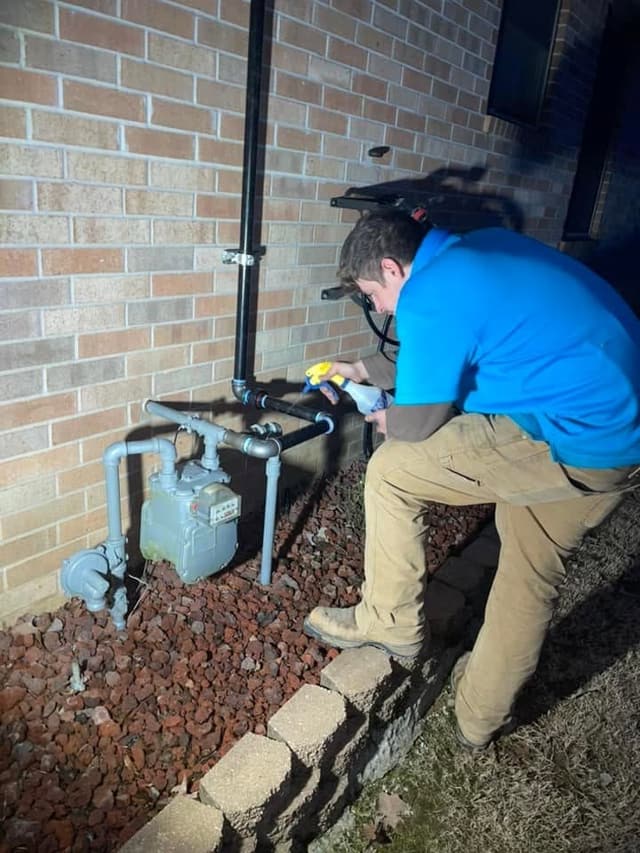
Pipe you can see. Rust or a dent on exposed pipe is worth fixing before it leaks. At a joint we suspect, we confirm the leak with a soap-and-water test.
The appliances. A poorly running appliance can be the appliance itself, or a line short on gas. A gas supply problem at a water heater goes to tank water heater repair or tankless repair.
How people feel. Headaches, dizziness, or nausea that ease when you step outside can point to a gas leak or carbon monoxide. Get out, then call 911.
A bigger job. We once traced a gas leak running across a campus of several buildings, then repaired it.
Water, not gas. A hidden water leak is a job for leak detection, and the buried line that brings water in is water line repair.
Before any pipe is touched, you hear what we found and what the fix will cost.
Word gets around
Careful work, in customers' words
4.9★ on Google · 20+ years in the trade behind the work
What gas line repair and replacement include
- 01
Call and get on the schedule.
- 02
A licensed tech finds what's wrong, and where.
- 03
You get the real number before the work starts.
What's included
- Gas leak repair, at a fitting or a damaged stretch of line
- Gas line replacement, when a line is too old or corroded to keep patching
- New gas lines indoors for stoves, dryers, furnaces, fireplaces, and a water heater's gas supply
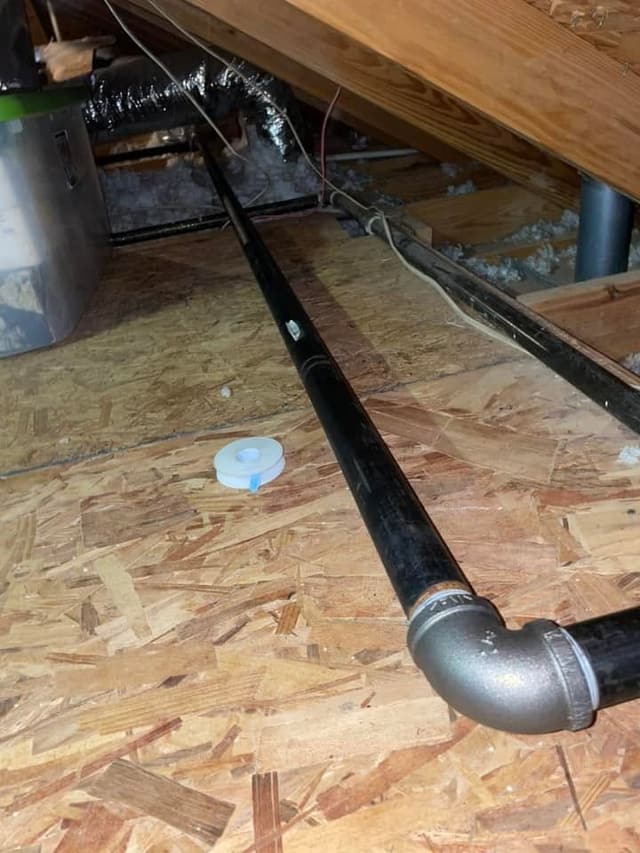
- New gas lines outdoors for cooking grills, fire pits, pool heaters, and backup generators (we run the line to the generator)
- Natural gas or propane: we work on both
- The permit, pulled by us, and a pressure test before the gas goes back on
We make the problem the problem, not the price.
How we price
What does gas line repair cost?
It depends on what's wrong: one fitting, a stretch of pipe, or the whole line. A price over the phone is a ballpark.
What moves the number: a fix or a new line, the length of the run, whether the pipe is buried or exposed, and what's in the way.
Simple service is billed by the hour. Big jobs are priced per job, with a free estimate. A gas line repair is billed by the hour; for a new gas line, you get an estimate first.
Gas service lines: what they are and who owns them
A gas service line carries natural gas from the meter into your house, where smaller lines branch off to each gas appliance; on propane, the line starts at the tank. The gas company usually owns and looks after the pipe up to the meter. Buried piping on your side of it is usually yours to maintain.
Why the line matters, and what gas pipe is made of
A sound line matters for three reasons. A leak can start a fire or an explosion. A leak, or an appliance that burns poorly, can put carbon monoxide in the house. And even a small leak wastes gas you pay for. Natural gas has no smell of its own; gas companies add one that smells like rotten eggs so a leak gets noticed.
- Plastic (polyethylene). Common for newer buried lines. It doesn't rust.
- Steel. Used inside homes and in older buried lines. Bare steel underground corrodes as it ages and is the type most prone to leaks.
- Copper. Found on some older lines.
On new lines we run black iron pipe or flexible CSST, such as ProFlex or TracPipe, and use yellow polyethylene only below ground.
Branch lines to a grill or other outdoor equipment are usually the homeowner's too. Your gas company can tell you exactly where its part ends. If the gas piping inside the house is failing throughout, that's a whole-house gas repipe.
Common causes of gas line problems
Corrosion, shifting ground, tree roots, digging, a poor install, and plain age cause most of them.
Each cause, and how to look after your gas line
- Corrosion. Older steel rusts underground, and faster in damp soil.
- Shifting ground. Soil that swells when wet and shrinks as it dries can crack pipe or pull a fitting loose.
- Tree roots. Roots press on a buried line and work at its joints.
- Digging. Excavators, fence posts, and landscaping can strike a line nobody marked.
- A poor install. Work by someone unqualified can leave weak joints and the wrong fittings.
- Age. Old pipe and fittings wear out.
To look after yours: know where the gas meter and its shut-off valve are, call 811 before any digging so buried lines get marked, keep new trees off the line's path, have buried metal piping checked now and then for leaks and corrosion, and replace an aging line before it fails. More in our guide, DIY or call the pros?
What to do if you smell gas
Leave, and take everyone with you. Don't flip a switch, use a phone, or strike a flame on the way out, and call 911 or your gas company from a neighbor's house or somewhere well away from the leak.
What to avoid, what happens next, and carbon monoxide alarms
- Don't start a car, open the garage door, or go looking for the leak.
- Warn neighbors and anyone nearby to stay away, if it's safe to.
- Stay out until the gas company or the fire department says it's safe to go back in.
- Then the repair. If the leak is on your side of the meter, the gas company may leave the gas off until it's fixed. That's our part: we find the leak and repair the line, Monday to Friday.
- Carbon monoxide. An appliance that burns poorly can make carbon monoxide, which you can't smell. Put a CO alarm on every level of the house and outside each sleeping area, test it monthly, and change the batteries every year.
Gas line questions
Does my gas line need a repair or a full replacement?
If the damage is one spot on a sound line, a repair is usually enough. Older or corroded lines, especially with trouble in more than one spot, are usually replaced for safety. We look at the whole line before we say which.
What gas line work do you do?
We repair and replace gas lines, natural gas or propane, and run new lines to stoves, dryers, furnaces, fireplaces, water heaters, pool heaters, fire pits, outdoor cooking grills, and backup generators. All of our techs are state licensed.
How long does a gas service line last?
It depends on the pipe and the soil. Plastic and coated steel hold up far longer underground than bare steel, which corrodes with age, faster in damp soil. An old or rusted line, or one already patched once, deserves a closer look.
Can I repair a gas line myself?
No. Gas piping has to meet safety codes, and one bad joint can leak. A leak can lead to a fire, an explosion, or carbon monoxide poisoning. Gas work is for a licensed professional. On our gas jobs, we pull the permit and pressure-test the line before the gas is turned back on.
How long does a gas line repair or replacement take?
Most repairs take about 1.5 to 3.5 hours. A replacement runs about 1.5 to 3 days, depending on the installation: how long the run is, and whether it's buried. Once we've found the problem, we tell you what the job involves.
Will gas line work dig up my yard?
Only if the problem is in a buried stretch of line, which we dig to reach. When we dig, we put the yard back as best we can, but we don't seed or sod.
Will my insurance pay for a gas line repair?
Some policies do. Many cover buried utility lines only with an added endorsement, so ask your insurer before the work starts.
Gas line repair across Central Arkansas
From our shop in North Little Rock, we handle gas plumbing for homes in Little Rock, North Little Rock, Maumelle, Sherwood, Bryant, and across Central Arkansas. Monday to Friday, 7:30 a.m. to 6 p.m.
Get the right answer
Small things turn into bigger problems.
A rusty fitting is an easier fix today than a failed line next year. Call, and we'll find the cause before we touch the pipe.