
Tips for Maintaining and Cleaning Your Garbage Disposal
Published Updated
4 min read
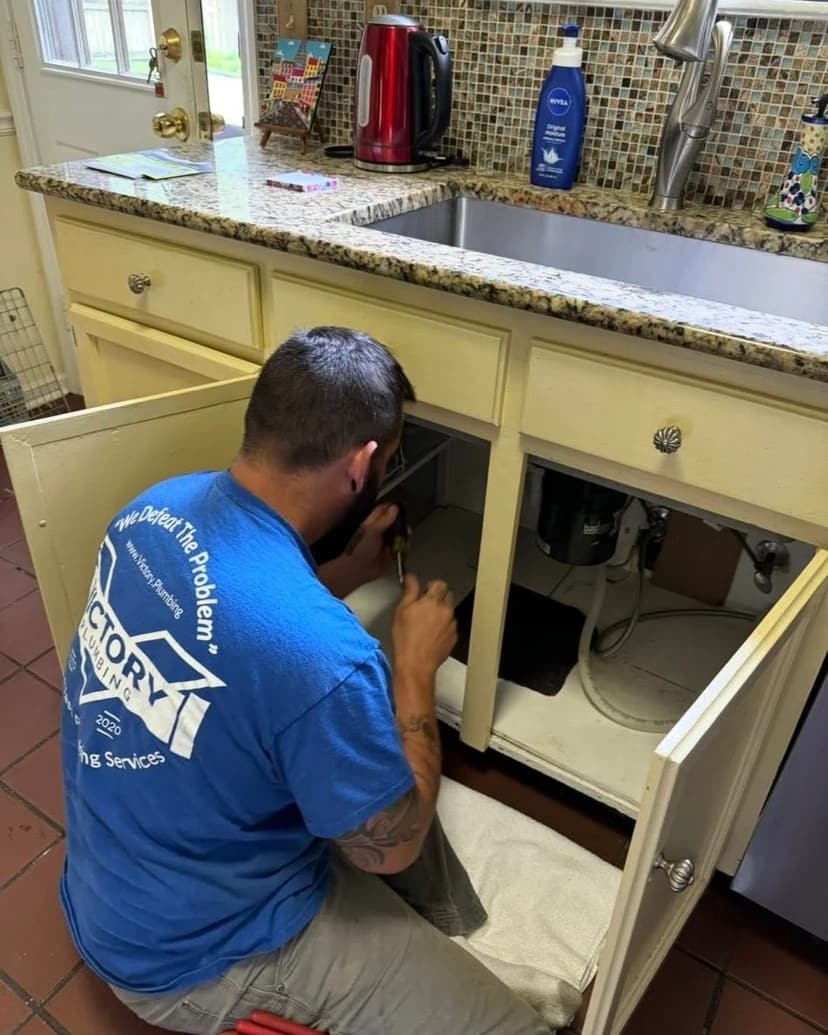
Run cold water, feed it a little at a time, keep grease out, and clean under the rubber baffle when it starts to smell. That's most of the care a disposal needs, going by InSinkErator, the company behind the Badger line we install.
Key takeaways
- Never put fats, oils or grease in a disposal, or down any drain.
- Cold water goes on first and stays on until the food is gone, plus a few seconds more.
- A smell usually means food buildup from too little water; clean the underside of the baffle and run baking soda and water through it.
- There are no blades to sharpen: lugs throw the food against a grind ring.
- If it stops, the red reset button on the bottom is the first thing to try.
How do I use a garbage disposal the right way?
Start the water first, then the disposal, then the food.
- Run a steady stream of cold water.
- Switch the disposal on before any food goes in.
- Add the food gradually; a big load all at once slows the grinding.
- When the grinding sound changes, it's done. Switch it off, then give the drain pipe a few more seconds of water.
Skip hot water while it grinds; hot water down the drain between uses is fine. Jammed or leaking anyway? See Plumbing repairs
What shouldn't go in a garbage disposal?
Grease first: fats, oils and grease collect inside the pipes and cause many plumbing problems, so they never go in a disposal or down a drain. Pour cooking grease into a can for the trash instead; LRWRA gives out grease cans and liners at no cost.
Past that, the list is shorter than most people think. InSinkErator says its disposals handle just about any everyday food waste, and that most what-not-to-grind lists rest on myths and old family stories. Coffee grounds and eggshells won't harm the disposal; the risk is to the pipes, which can clog if a lot goes down together or the plumbing is old or narrowed, so add them slowly with a strong flow of cold water. It's built for food, so nothing else goes in.
No chemical drain cleaners, either. Lye and chemical drain cleaners seriously corrode a disposal's metal parts, according to Moen, another disposal maker, and it rules them out entirely.
How do I clean a garbage disposal?
With the power off and your hands out of it, follow InSinkErator's four steps:
- Switch off the disposal and disconnect its power.
- Reach through the sink opening and scrub the underside of the rubber baffle and the upper lip of the grind chamber with a scouring pad.
- Put the stopper in and fill the sink halfway with warm water.
- Stir in a quarter cup of baking soda, then turn the disposal on and pull the stopper at the same time, so the water carries the loose bits away.
How do I get rid of a garbage disposal smell?
Find the food buildup that's causing it. InSinkErator says an odor is usually a sign of food buildup from too little water during and after use, so the cleaning steps above are the real fix. For a quick freshen-up, run cold water and drop in ice cubes with lemon or lime wedges, though the maker says there are better ways to clean a disposal than ice.
And ice can't sharpen the blades, because there aren't any. InSinkErator disposals have no blades or knives; lugs throw food against a stationary grind ring, which breaks it down into fine particles.
What do I do if my garbage disposal stops working?
Try the reset button first. A disposal shuts itself off when it's clogged, overheated or run too long, and pops out a red button on the bottom. With the switch off, press the button back in gently; if it won't stay in, wait ten minutes and try again, then run cold water and switch it on. Never put your hand inside to clear it.
If the button won't stay in, or keeps tripping, the disposal may need service or replacement. We repair and replace disposals, and fix ones another company put in wrong. Most disposal installs take about 1 to 2 hours.
Want this handled?
Disposal jammed, leaking or past saving? We repair and replace them, and our go-to new one is the Badger 5.